منبع

مطلب دوم

منبع


Bild von Institut mit Unilogo
home uni uni suche suche sitemap sitemap kontakt kontakt
unilogo Universität Stuttgart
Institut für Raumfahrtsysteme
Abteilung: Raumtransporttechnologie

Diagnostik

englishiconDruckansicht
 
/

Laserinduzierte Fluoreszenzmessungen (LIF) bieten die Möglichkeit, Spurenstoffe, die zum Teil flüchtig sind, nachzuweisen. Ein energiereicher Laserstrahl wird benutzt, um bei geeigneter Wahl der Wellenlänge Atome oder Moleküle in einen höheren Energiezustand anzuregen. Die anschließende Emission, d.h. das beim Übergang vom Anregungszustand in einen tieferen Energiezustand emittierte Licht, bezeichnet man als Fluoreszenz.

NO Energielevels
Bild 1: Energieniveaus und LIF-Schema für Stickstoffmonoxid (NO)

Am Institut für Raumfahrtsysteme steht ein Lasersystem der Firma Lambda Physik (Göttingen) zur experimentellen Untersuchung von Plasmaströmungen und Hitzeschutzmaterialien zur Verfügung. Das Lasersystem setzt sich zusammen aus einem Excimerlaser COMPex 201, der als Pumpquelle für einen Farbstofflaser SCANmate 2E dient. Um die für eine elektronische Anregung meist notwendige ultraviolette Strahlung zu erzeugen, ist dem Farbstofflaser eine Frequenzverdopplungseinheit nachgeschaltet. Mit diesem Aufbau ist es möglich, durch
geeignete Wahl des Farbstoffes, jede erforderliche Wellenlänge zu erreichen.

Die Versuche werden sowohl an Kaltgastestständen als auch an den IRS-Plasmawindkanälen durchgeführt. Dabei werden derzeit zwei Ziele verfolgt:

  • Charakterisierung der Plasmaströmungen für Wiedereintrittssimulationen und Untersuchung der Grenzschicht vor Sondenkörpern.
  • Bestimmung der Teilchendichten in Xenon-Ionentriebwerken zur Optimierung der elektrischen Antriebe.


Am IRS wird dabei versucht, folgende Messgrößen zu ermitteln:

  • Bestimmung von absoluten Teilchenkonzentrationen von NO, N, O, CO, Xe.

  • Bestimmung von Rotations- und Translationtemperaturen.

  • Bestimmung von Teilchengeschwindigkeiten.

  • Bestimmung der relativen Teilchenkonzentrationen von Siliziummonoxid SiO im Erosionsprozess von Hitzeschutzmaterialien.

Aufbau PWK1PWK1

Bild 2: Schematisch dargestellter Aufbau für Messungen am PWK1

Bei Fragen oder Anregungen wenden Sie sich bitte an Stefan Löhle


منبع

Laser induced fluorescence in the plasma wind tunnels of IRS

A big part of our knowledge of the structure of atoms or molecules is being provided by laserdiagnostic measurement methods. Laser-based techniques offer the capability for nonintrusive, spatially and temporally resolved measurements of a host of important erosion parameters. The interaction between electromagnetic radiation and particles leads to absorption or emission spectras, from which one can extract informations about the behaviour of species under investigation. It is of basic interest for further developments, that chemical processes of thermal protection materials are well examined and understood. The method of laser induced fluorescence can make a contribution to this objective. It offers the possibility to investigate species under interest in a selective way, just by choosing the appropriate wavelength. Fluorescence is the emission of light from an atom or molecule following promotion to an excited state by photon absorption.

At the Institute for Space Systems, in cooperation with the Institute for Thermodynamics, is a laser system available to experimentally examine plasma beams and thermal protection materials as well as supersonic flows. This work is funded by the Deutsche Forschungsgesellschaft in a special research program (SFB 259). The laser system consists of an excimer laser Lambda Physik COMPex201, a dye laser Lambda Physik SCANmate 2E and a second harmonic generator to doubble the frequency. It is possible to obtain wavelengths from around 200 nanometers up to 1050 nanometers by choosing the desired dye.

Objectives of the project „LIF in the plasma wind tunnels of IRS"

  • Determination of density distributions.
  • Determination of rotational and translational temperatures.
  • Determination of particle velocity.

With species under investigation:

  • nitrogen oxid NO
  • silicon oxide SiO
  • atomic nitrogen N
  • atomic oxygen O

For further informations please contact feigl@irs.uni-stuttgart.de

منبع


منبع

ويسكوزيته ( لزجت )

ويسكوزيته ( لزجت )

ويسكوزيته ( لزجت ) خاصيتي است كه سيال به وسيله آن در مقابل تنش برشي مقاومت مي كند. با افزايش دما لزجت گازها افزايش مي يابد اما لزجت مايعات كاهش مي يابد اين تفاوت را مي توان با بررسي عوامل لزجت توضيح داد.
هر فازي در مقابل حرکت توده هاي خود داراي مقاومت مي باشد . اين مقاومت براي فاز گاز ناچيز و براي فاز جامد خيلي زياد مي باشد . مايعات نيز در برابر حرکت لايه هاي خود از خود مقاومت نشان مي دهند .
لزجت سيالات يعني مقاومت آنها به تنش برشي ناشي از دو عامل است:
1- نيروي جاذبه مولكولي
2- تبادل مومنتوم مولكولي

براي مايعات بيشتر تحقيقات بر عبور مايع در لوله ها معطوف شده است و بيشتر روابط موجود نيز براي مايعات با سرعتهاي مختلف در لاله ها با قطر و زبريهاي متفاوت بدست آمده اند. حرکت يک مايع در درون لوله مي تواند شامل سه بخش عمده باشد : 
1- حرکت آرام ( Laminar Flow ) در اين نوع حرکت لايه هاي مايع به آرامي برروي هم مي لغزند و حرکت مايع ادامه مي يابد طول اين ناحيه بنا به سرعت اوليه مايع يا زبري سطح لوله مي تواند کوتاه يا بلند باشد.
2- ناحيه گذار ( Transition Zone ) در اين ناحيه حرکت آرام مايع کم کم به حرکت اغتشاشي تبديل مي گردد و معمولاٌ طول اين ناحيه بسيار کوتاه است.
3- حرکت  آشفته ( مغشوش ) ( Torbulent Flow ) در اين ناحيه مايع حرکت آرام خود را از دست داده و ذرات مايع داراي حرکات متفاوتي در جهت هاي مختلفي مي شوند اين ناحيه ممکن است داراي زير لايه اي باشد که در آن هنوز حرکت مايع آرام باشد.

در مايعات فاصله مولكولها بسيار نزديكتر از گازها است لذا نيروي جاذبه مولكولي در گازها كمتر از مايعات است از اين رو عامل اصلي لزجت مايعات نيروي جاذبه مولكولي است اما در گازها جاذبه مولكولي بسيار كم است مقاومت گازها به تنش برشي عمدتا ناشي از تبادل مومنتوم مولكولي است.
مايعات با سرعت اوليه وارد لوله مي گردند و لايه هاي زيرين که در مجاورت ديواره هاي لوله هستند سرعتشان صفر مي گردد لايه هاي مجاور اين لايه ها متاثراز لايه هاي ساکن از سرعت اوليه شان کاسته مي شود و لايه هاي بالاتر از اين لايه ها تحت تاثير اين لايه ها سرعتشان کاسته مي شود ولي اين تاثير کمتر از لايه قبلي است همينطور اين تاثير لايه قبلي کاسته مي شود تا جايي که سرعت سيال بربر با سرعت اوليه مي شود و آنجا پايان لايه مرزي است.
ممکن است قطر لوله آنقدر کم باشد که لايه هاي مرزي تداخل پيدا کنند و يا ممکن است ديواره هاي لوله آنقدر از هم فاصله داشته باشند که حتي لايه هاي مرزي به همديگر هم نرسند .
اين تاثير لايه ها را و نيروي بازدارندگي آنها را اصطلاحا نيروي برشي يا  Shear Stress  ناميده مي شود و با نماد  τ  نشان داده مي شود.

اين نيروي برشي افقي متناسب است با تغييرات سرعت به تغييرات ارتفاع .

و ويسکوزيته را براي سيالات دراي حرکت  kinematic viscosity  نشان مي دهند و داراي رابطه زير است.

ويسکوزيته معيار بسيار مناسبي براي روانروي يا گرانروي سيالات در لوله ها مي باشد ، براي سيالات غليظ  که داراي گرانروي بالايي هستند اين مقدار مقدار بزرگي است مانند روغنهاي اتومبيل و براي آنهايي که براحتي حرکت مي کنند و روانروي خوبي دارند اين مقدار کوچکي مي باشد مانند آب.
با محاسبات ابعادي براي ويسکوزيته در حالت ديناميک ( Dynamic viscosity  ) مي توان واحد آن را بدست آورد که واحد آن Pa . s يا بطور مشابه N.s/m²  و يا Kg / m.s است که آنرا با CP  نيز نمايش مي دهند .  
                                                                                    ۱۰۰centipoise =  ۱g/cm.s = ۰.۱Pa.s 

معمولا ويسکوزيته را در دماي معيني اندازه مي گيرند و به عنوان مرجع از آن استفاده مي کنند براي آب خالص اين مقدار در دماي 20 درجه اندازه گيري شده است و برابر است با  1.0cP و اين آب مرجع و مبناي محاسبات ساير ویسکوزيته ها براي ساير مواد مي باشد .
براي  Kinematic viscosity واحد ν  در سيستم SI برابر با m²/s است و در سيستم cgs هم برابر با stokes يا در برخي موارد هم با (centistokes (cS نشان مي دهند.

     ۱stokes = 100 centistokes =  0.0001m²/s  = 1s²/m

http://4800.blogfa.com/post-84.aspx

ويسكوزيته  

هنگامي كه سيالي در يك لوله غير مويين يا قيفي شكل به جريان در مي‌آيد سيال مقاومتي در برابر جاري شدن از خود نشان مي‌دهد مقدار مقاومت در برابر جاري شدن سيال فقط به مقدار ويسكوزيته سيال بستگي دارد. گاز يا مايعي كه در يك لوله يا يك ظرف قيفي شكل جاري است ، يك لايه خيلي نازك ساكن در تماس با ديواره ظرف تشكيل مي‌دهد بدين ترتيب جريان سيال مي‌تواند به نيروي لازم براي حركت دادن يك قشر نسبت به قشر ديگر مربوط شود. اين نيرو با سطح A اين قشرها و اختلاف سرعت V بين قشرها نسبت مستقيم و با فاصله L بين دو قشر نسبت عكس دارد.

 «اتا» ضريب ويسكوزيته يا به عبارت ساده همان ويسكوزيته معرفي مي‌شود.


پارامترهای موثر در تعیین ویسکوزیته (Viscosity)


مقدمه :

تعیین مقدار ویسکوزیته در انواع مواد اولیه و محصولات مانند شامپو ، مایع دستشویی ، ژل ها و محلولها از اهمیت ویژه ای برخوردار است و یکی از فاکتورهای نسبتا مهم در آنالیز نمونه است .

مقدار ویسکوزیته نسبت مستقیم با ماهیت نیوتونی مواد دارد . اگر نمونه ماهیت نیوتونی داشت (یعنی بر همکنش یا برآیند نیروها در مرکز ثقل نمونه صفر بود) مقدار ویسکوزیته با تغییر سرعت و تغییر اسپیندل ثابت خواهد ماند . اما اگر نمونه ماهیت نیوتونی نداشت مقدار ویسکوزیته به عوامل زیادی بستگی پیدا خواهد کرد . از جمله با تغییر اسپیندل ، تغییر سرعت و حتی با تغییر Source مواد سازنده نیز تغییر خواهد کرد .

در نتیجه تعیین مقدار ویسکوزیته مواد اولیه و محصولات یک کار کاملا تجربی است که تعریف محدوده برای هر Sample یک پروسه طولانی دارد که شامل عوض کردن اسپندل های مختلف در سرعت های مختلف و در عین حال ثابت بودن دما در رنج 20-25°c می باشد .


خصوصيات دستگاه

در شرکت ایران ناژو از دستگاه ويسكومتر شركت Broodfield آمريكا مدل LV با مشخصات DV-II+V استفاده شده است و قادر به خواندن 18 رنج سرعت مي باشد .  


دما :572ºF)                                                            تا148ºF- ( 300ºC تا100ºC –

تُرك :                                                                                                     0-100%

صحت ويسكوزيته :                                                                                      1.0% ±

صحت دما :                                                                   149ºC+ تا 100ºC - :1ºC  ±

300ºC+ تا 150ºC + :2ºC  ± 

رنج ويسكوزيته :                                               (مدل+ LVDV-II)6000000CP  - 15                       

دماي محيط اپراتوري :                                               0ºC-40ºC (32ºF-104ºF)       

رطوبت محيط اپراتوري :       20%-80%  R.H. : non - Condensing at mosphere  


دستگاه ویسکومتر بايد سالي يكبار توسط شركت سازنده كاليبره شود .


تعاریف :

ويسكوزيته : (Viscosity) ‍: نسبت مقاومت سيال به فلوي ايجاد شده را ويسكوزيته مي نامند .

گشتاور : (Torque) : نيرويي كه لازم است بر اسپيندل وارد شود تا با توجه به ويسكوزيته در نمونه بچرخد.

واحد ويسكوزيته : (cp) Centipoise يا ميلي پاسكال ثانيه (mpas) يا Shear Stress است.


شرح دستگاه :

ويسكومتر شامل قسمتهاي زير است :

اسپيندل : (Spindel) : محورهای چرخشي بنام Spindel وجود دارد که هرچه نمونه ، ويسكوزيته بالاتري داشته باشد شماره اسپيندل بالاتر مي رود .

چرخش Spindel در نمونه به سرعت و سايز  آن ، ظرف حاوي نمونه و به ميزان گشتاور (Torque) بستگي دارد .

گارد : براي محافظت از Spindel در بدنه دستگاه تعبيه شده است .

سنسور دما : ويسكوزيته به دما بستگي زيادي دارد . دماي بالا ويسكوزيته را پائين نشان مي دهد .پس بايد به رنج دما در نمونه هاي آناليز توجه كنيد .

ظرف حاوي نمونه : ‌از يك بشر 250ml استفاده كنيد كه گاردوسنسور دما و اسپيندل (دقيقا تا خط نشانه روي اسپيندل) در آن قرار گيرند .

مهم : باید توجه داشت که تعیین مقدار ویسکوزیته در نمونه های مشابه و یا در حالت مقایسه باید در شرایط کاملا یکسان باشد .

روش بدست آوردن رنج ویسکوزیته

1-از پائین ترین شماره اسپندل شروع کنید . برای تعیین مقدار ویسکوزیته پائین ترین شماره ارجحیت دارد .

2-در هر مرحله برای تعیین ویسکوزیته خصوصا در RPM های پائین ، حداقل یک ربع زمان بگذارید .

3-پس از تعیین شماره اسپندل ، اگر نسبت تغییر سرعت ، متناسب با تغییر ویسکوزیته بود ، نشان می دهد نمونه ماهیت نیوتونی دارد و از ترکیب یکنواختی برخوردار است و به عبارتی :

                                                     ∆ RRM ~ ∆ Viscosity

4-جدول ویسکوزیته را تشکیل دهید . سپس با همه اسپندل ها و همه سرعتها ویسکوزیته نمونه را گرفته و فقط مقادیری را که دارای ترک بالای 50% هستند در جدول یادداشت کنید .

5-با انتخاب پائین ترین اسپندل که بالاترین ترک و بالاترین سرعت را در جدول داراست رنج ویسکوزیته را برای نمونه  انتخاب کنید .

رسم جدول

براي تعيين مقدار درست ويسكوزيته جدولي به شكل زير رسم كنيد.


تاريخ آزمايش

نام نمونه

شماره اسپيندل

سرعت

ويسكوزيته (CP)


% ترك

دما

( Cº )


از اسپيندلي با شماره كم شروع كنيد و مقادير سرعت ، Torque و .... را درجدول بالا يادداشت كنيد از بين مقادير خوانده شده ويسكوزيته اي را انتخاب كنيد كه داراي بالاترين سرعت و ترك باشد .

ترك زير 10 قابل قبول نيست و بهتر است سرعت و ترك بالاي 50 باشند . اگر دستگاه قادر به خواندن مقادير ويسكوزيته نباشد حروف EEEE را نشان مي دهد .


عيب يابي دستگاه :

براي اطمينان از صحت نتايج از هر يك از روشهاي زير ميتوان استفاده كرد .

1- ماهي يكبار ويسكوزيته موادي را كه مقادير ويسكوزيته آنها در برگه آناليز داده شده است ، با توجه به رنج دماي داده شده ، اندازه گرفته و سپس مقايسه نمائيد . مقدار ويسكوزيته بايد در يك حدود باشد.

2-ويسكوزيته يك نمونه با غلظت معمولي را بمدت يك هفته هر روز اندازه بگيريد . در يك هفته بايد تغييرات ناچيز باشد .

3-نمونه را به مدت سه ساعت مورد اندازه گيري قرار دهيد . اسپيندلي را كه مناسب آن است انتخاب كرده و با كشيدن جدول ويسكومتر يك ربع به يك ربع نتايج را يادداشت كنيد . در طول سه ساعت نبايد مقدار ويسكوزيته تغيير كند . روز بعد همين آزمايش را تكرار كنيد . بايد نتايج مشابهي بدست آيد .

اگر با انجام دادن اين كارها به نتيجه نرسيديد با شركت سازنده تماس حاصل كنيد .


نگهداري از دستگاه

4-1-اسپيندل ها بسيار حساس هستند و نبايد ضربه بخورند . براي شستن آنها نبايد از مواد خورنده استفاده كرد . پس از شستن با آب و خشك كردن در جاي مخصوص خود قرار دهيد .

4-2-هيچ وقت گارد را باز نكنيد و با پي ست محتوي آب RO آن را شسته و خشك نمائيد . هميشه مواظب باشيد آب به بدنه دستگاه نخورد .

4-3-پس از پايان كار حتما پيچ سياه مخصوص محور گرداننده را ببنديد تا از ضربه هاي احتمالي به آن محافظت شود .


برای اطلاعات بیشتر در این زمینه با شرکت ایران ناژو تماس حاصل فرمائید .


فرحناز حدیدساز کارشناس ارشد آزمایشگاه شیمی

http://www.irannajo.com/scan/viscose.htm 


شعبده بازی


عرق نعنا و شربت انار


شعبده باز دو بطري روي ميز دارد . يکي محتوي مايع قرمز خوشرنگ ، که اتيکت " شربت انار " دارد و ديگر حاوي مايع بي رنگ است که در اتيکت آن " عرق نعنا " نوشته شده است . دو تنگ شيشه اي به ظاهر پر از آب هم کنار آنها ديده مي شود . دو ليوان خالي روي ميز قار دارد . او در يک ليوان کمي شربت انار و در ديگري کمي عرق نعنا مي ريزد و اظهار مي دارد که آنها خيلي غليظ هستند و بايد با آب رقيق شوند . از تنگ اول هر دو را تا نصف پر مي کند ، ناگهان رنگ آنها عوض مي شود . عرق نعنا به شربت انار تبديل مي شود و شربت انار هم به عرق نعنا تبديل مي شود . دوباره روي آنها از تنگ دوم مي ريزد هر دو به رنگ اول خود در مي آيند

http://daneshjoygachsaran.parsiblog.com/634781.htm

محتوي بطري "شربت انار" عبارت است از آب ، به اضافه ي کمي فوشين که در الکل حل شده است . محتوي بطري " عرق نعنا " را نيز آب و چند قطره محلول فنل فتالئين در الکل تشکيل مي دهد .


در تنگ اول هم آمونياک و در تنگ دوم هم اسيد استيک به جاي اب ريخته شده است . با ريختن آمونياک روي شربت انار رنگ قرمز آن زايل شده و در حالي که عرق نعنا قرمز مي شود . اما با ريختن اسيد استيک رقيق هر دوي آنها به رنگ اوليه ي خود در مي آيند .

خبر های جدید

با کوچک‌تر شدن ساختارهای مس، استحکام آن افزایش می‌یابد؛ اما زمانی که اندازه‌ی ساختارها کوچک‌تر از 15 نانومتر باشد فلز به‌شکلی غیرمنتظره شروع به نرم شدن می‌کند.

موفقیت دانشمندان

به تولید نانومس با استحکامی چهار برابر مس معمولی


 با کوچک‌تر شدن ساختارهای مس، استحکام آن افزایش می‌یابد؛ اما زمانی که اندازه‌ی ساختارها کوچک‌تر از 15 نانومتر باشد فلز به‌شکلی غیرمنتظره شروع به نرم شدن می‌کند.


محققان نشان داده‌اند می‌توان فلز مسی تولید کرد که در عین حفظ انعطاف‌پذیری، استحکام آن چهار برابر مس تجاری باشد.

به‌گزارش خبرگزاری دانشجویان ایران (ایسنا)، از آن‌جایی که رسانایی الکتریکی و حرارتی این نوع از مس هم‌چنان خوب است می‌توان از آن برای تولید رساناهای الکتریکی استفاده کرد که از استحکام مکانیکی بالایی برخوردارند.

استحکام یک فلز به میکروساختار آن بستگی دارد؛ هرچه میکروساختار یک فلز کوچک‌تر باشد استحکام آن بیش‌تر است. اما ممکن است این سؤال پیش بیاید که آیا این قاعده‌ی بنیادی در مورد ساختارهای بسیار کوچک نیز صدق می‌کند؟

دانشمندان مواد در سراسر دنیا با این چالش مواجه بوده‌اند؛ حال یک گروه پژوهشی مشترک از محققان چینی و دانمارکی پژوهش‌هایی انجام داده‌اند که منجر به درک بیش‌تر ما از این موضوع شده است.

نتایج به‌دست آمده از نظر علمی بسیار مهم هستند اما در عین حال از نظر فناوری نیز جالب هستند.

همان‌گونه که انتظار می‌رفت با کوچک‌تر شدن ساختارهای مس، استحکام آن افزایش می‌یابد؛ اما زمانی که اندازه‌ی ساختارها کوچک‌تر از 15 نانومتر باشد فلز به‌شکلی غیرمنتظره شروع به نرم شدن می‌کند.

با استفاده از مطالعه‌های میکروسکوپی که روی این ساختارها انجام شده است فرایندهای فیزیکی‌ای شناسایی شده‌اند که منجر به این نرم شدن غیرعادی می‌شوند.

نانوفلزهای ابرسخت برای ادامه‌ی این پروژه‌ی پژوهشی مشترک، ایده‌ال بوده و به‌کارگیری آن‌ها در کاربردهای عملی بسیار نویدبخش است.

نتایج این تحقیق در شماره‌ی 30 ژانویه‌ی 2009 در مجله‌ی «ساینس» (Science) منتشر شده است.


      منبع خبر : ايسنا

Cytotoxicity

From Wikipedia, the free encyclopedia

Jump to: navigation, search

Cytotoxicity is the quality of being toxic to cells. Examples of toxic agents are a chemical substance, an immune cell or some types of venom e.g. from the puff adder or brown recluse spider.

[edit] Cell Physiology

Treating cells with a cytotoxic compound can result in a variety of cell fates. The cells may undergo necrosis, in which they lose membrane integrity and die rapidly as a result of cell lysis. The cells can stop actively growing and dividing (a decrease in cell viability), or the cells can activate a genetic program of controlled cell death (apoptosis).

Cells undergoing necrosis typically exhibit rapid swelling, lose membrane integrity, shut down metabolism and release their contents into the environment. Cells that undergo rapid necrosis in vitro do not have sufficient time or energy to activate apoptotic machinery and will not express apoptotic markers.[1] Apoptosis is characterized by well defined cytological and molecular events including a change in the refractive index of the cell, cytoplasmic shrinkage, nuclear condensation and cleavage of DNA into regularly sized fragments.[2] Cells in culture that are undergoing apoptosis eventually undergo secondary necrosis. They will shut down metabolism, lose membrane integrity and lyse.[2][3]

[edit] Measuring Cytotoxicity

Cytotoxicity assays are widely used by the pharmaceutical industry to screen for cytotoxicity in compound libraries. Researchers can either look for cytotoxic compounds, if they are interested in developing a therapeutic that targets rapidly dividing cancer cells, for instance; or they can screen "hits" from initial high-throughput drug screens for unwanted cytotoxic effects before investing in their development as a pharmaceutical.

Assessing cell membrane integrity is one of the most common ways to measure cell viability and cytotoxic effects. Compounds that have cytotoxic effects often compromise cell membrane integrity. Vital dyes, such as trypan blue or propidium iodide are normally excluded from the inside of healthy cells; however, if the cell membrane has been compromised, they freely cross the membrane and stain intracellular components.[3] Alternatively, membrane integrity can be assessed by monitoring the passage of substances that are normally sequestered inside cells to the outside. One commonly measured molecule is lactate dehydrogenase (LDH).[4] Protease biomarkers have been identified that allow researchers to measure relative numbers of live and dead cells within the same cell population. The live-cell protease is only active in cells that have a healthy cell membrane, and loses activity once the cell is compromised and the protease is exposed to the external environment. The dead-cell protease cannot cross the cell membrane, and can only be measured in culture media after cells have lost their membrane integrity.[5]

Cytotoxicity can also be monitored using the MTT or MTS assay. This assay measures the reducing potential of the cell using a colorimetric reaction. Viable cells will reduce the MTS reagent to a colored formazan product. A similar redox-based assay has also been developed using the fluorescent dye, resazurin. In addition to using dyes to indicate the redox potential of cells in order to monitor their viability, researchers have developed assays that use ATP content as a marker of viability.[3] Such ATP-based assays include bioluminescent assays in which ATP is the limiting reagent for the luciferase reaction.[6]

Cytotoxicity can also be measured by the Sulforhodamine B (SRB) assay, WST assay and clonogenic assay.

A label-free approach to follow the cytotoxic response of adherent animal cells in real-time is based on electric impedance measurements when the cells are grown on gold-film electrodes. This technology is referred to as Electric cell-substrate impedance sensing or short ECIS. Label-free real-time techniques provide the kinetics of the cytotoxic response rather than just a snapshot like in many colorimetric endpoint assays.

[edit] Immune System Cytotoxicity

Antibody-dependent cell-mediated cytotoxicity (ADCC) describes the cell-killing ability of certain lymphocytes, which requires the target cell being marked by an antibody. Lymphocyte-mediated cytotoxicity, on the other hand, does not have to be mediated by antibodies; nor does complement-dependent cytotoxicity (CDC), which is mediated by the complement system.

Three groups of cytotoxic lymphocytes are distinguished:

[edit] References

  1. ^ Promega Corporation (2006) Protocols and Applications Guide. Cell Viability.
  2. ^ a b Promega Corporation (2007) Protocols and Applications Guide. Apoptosis.
  3. ^ a b c Riss TL, Moravec RA (February 2004). "Use of multiple assay endpoints to investigate the effects of incubation time, dose of toxin, and plating density in cell-based cytotoxicity assays". Assay Drug Dev Technol 2 (1): 51–62. doi:10.1089/154065804322966315. PMID 15090210
  4. ^ Decker T, Lohmann-Matthes ML (November 1988). "A quick and simple method for the quantitation of lactate dehydrogenase release in measurements of cellular cytotoxicity and tumor necrosis factor (TNF) activity". J. Immunol. Methods 115 (1): 61–9. PMID 3192948
  5. ^ Niles AL, Moravec RA, Eric Hesselberth P, Scurria MA, Daily WJ, Riss TL (July 2007). "A homogeneous assay to measure live and dead cells in the same sample by detecting different protease markers". Anal. Biochem. 366 (2): 197–206. doi:10.1016/j.ab.2007.04.007. PMID 17512890
  6. ^ Fan F, Wood KV (February 2007). "Bioluminescent assays for high-throughput screening". Assay Drug Dev Technol 5 (1): 127–36. doi:10.1089/adt.2006.053. PMID 17355205

[edit] External links

This medical article is a stub. You can help Wikipedia by expanding it.


http://en.wikipedia.org/wiki/Cytotoxicity


Cytotoxic T cell

From Wikipedia, the free encyclopedia

Jump to: navigation, search

Antigen presentation stimulates T cells to become either "cytotoxic" CD8+ cells or "helper" CD4+ cells.

A cytotoxic T cell (also known as TC, CTL, T-Killer cell, cytolytic T cell, CD8+ T-cells or killer T cell) belongs to a sub-group of T lymphocytes (a type of white blood cell) that are capable of inducing the death of infected somatic or tumor cells; they kill cells that are infected with viruses (or other pathogens), or are otherwise damaged or dysfunctional. Most cytotoxic T cells express T-cell receptors (TCRs) that can recognize a specific antigenic peptide bound to Class I MHC molecules, present on all nucleated cells, and a glycoprotein called CD8, which is attracted to non-variable portions of the Class I MHC molecule. The affinity between CD8 and the MHC molecule keeps the TC cell and the target cell bound closely together during antigen-specific activation. CD8+ T cells are recognized as TC cells once they become activated and are generally classified as having a pre-defined cytotoxic role within the immune system.

[edit] Cytotoxic T cell development

Development of single positive T cells in the thymus

Hematopoietic stem cells in the bone marrow migrate into the thymus, where they undergo VDJ recombination of their beta-chain TCR DNA to form a developmental form of the TCR protein, known as pre-TCR. If that rearrangement is successful, the cells then rearrange their alpha-chain TCR DNA to create a functional alpha-beta TCR complex. This highly-variable genetic rearrangement product in the TCR genes helps create millions of different T cells with different TCRs, helping the body's immune system respond to virtually any protein of an invader. The vast majority of T cells express alpha-beta TCRs (αβ T cells), but some T cells in epithelial tissues (like the gut) express gamma-delta TCRs (γδ T cells), which recognize non-protein antigens.

T cells with functionally stable TCRs express both the CD4 and CD8 co-receptors and are therefore termed "double-positive" (DP) T cells (CD4+CD8+). The double-positive T cells are exposed to a wide variety of self-antigens in the thymus and undergo two selection criteria:

  • (1) positive selection, in which those double-positive T cells that bind too weakly to MHC-presented self antigens undergo apoptosis because of their inability to recognize MHC-protein complexes.
  • (2) negative selection, in which those double-positive T cells that bind too strongly to MHC-presented self antigens undergo apoptosis because their propensity (an often intense natural inclination or preference) to become autoreactive could lead to autoimmunity.

Only those T cells that bind to the MHC-self-antigen complexes weakly are positively selected. Those cells that survive positive and negative selection differentiate into single-positive T cells (either CD4+ or CD8+), depending on whether their TCR recognizes an MHC class I-presented antigen (CD8) or an MHC class II-presented antigen (CD4). It is the CD8+ T-cells that will mature and go on to become cytotoxic T cells following their activation with a class I-restricted antigen.

[edit] Cytotoxic T cell activation

With an exception of some cell types, such as non-nucleated cells (including erythrocytes), Class I MHC is expressed by all host cells. When these cells are infected with a virus (or another intracellular pathogen), the cells degrade foreign proteins via antigen processing. These result in peptide fragments, some of which are presented by MHC Class I to the T cell antigen receptor (TCR) on CD8+ T cells.

The activation of cytotoxic T cells is dependent on several simultaneous interactions between molecules expressed on the surface of the T cell and molecules on the surface of the antigen-presenting cell (APC). For instance, consider the two signal model for TC cell activation.

Signal

T cell

APC

Description

first signal

TCR

peptide-bound MHC class I molecule

There is a second interaction between the CD8 coreceptor and the class I MHC molecule to stabilize this signal.

second signal

CD28 molecule on the T cell

either CD80 or CD86 (also called B7-1 and B7-2)

CD80 and CD86 are known as costimulators for T cell activation. This second signal can be assisted (or replaced) by stimulating the TC cell with cytokines released from helper T cells.

Once activated, the TC cell undergoes clonal expansion with the help of a cytokine called Interleukin-2 (IL-2) that is a growth and differentiation factor for T cells. This increases the number of cells specific for the target antigen that can then travel throughout the body in search of antigen-positive somatic cells.

[edit] Cytotoxic T cell effector functions

When exposed to infected/dysfunctional somatic cells, TC cells release the cytotoxins perforin and granulysin. Perforin forms pores in the target cell's plasma membrane allowing granzymes, types of serine proteases, to enter the target cell, which then activate a series of enzymes, the caspase cascade, that eventually lead to apoptosis (programed cell death). A second way to induce apoptosis is via cell-surface interactions between the TC and the infected cell. When a TC is activated it starts to express the surface protein FAS ligand (FasL), which can bind to Fas molecules expressed on the target cell. However, this Fas-Fas ligand interaction is thought to be more important to the disposal of unwanted T lymphocytes during their development or to the lytic activity of certain TH cells than it is to the cytolytic activity of TC effector cells.

[edit] Cytotoxic T cell role in disease pathogenesis

During HBV infection cytotoxic T cells play an important pathogenetic role. They contribute to nearly all of the liver injury associated with HBV infection and, by killing infected cells and by producing antiviral cytokines capable of purging HBV from viable hepatocytes, cytotoxic T cells also eliminate the virus.[1] Recently platelets have been shown to facilitate the accumulation of virus-specific cytotoxic T cells into the infected liver.[2]

[edit] References

  1. ^ Iannacone M. et al (2006). "Pathogenetic and antiviral immune responses against hepatitis B virus". Future Virology 1 (2): 189-196. doi:10.2217/17460794.1.2.189 Future Virology]
  2. ^ Iannacone M. et al (2005). "Platelets mediate cytotoxic T lymphocyte-induced liver damage". Nat Med 11: 1167–1169. 

http://en.wikipedia.org/wiki/Cytotoxic_T_cell


Passive

Passivation is the process of making a material "passive" in relation to another material prior to using the materials together. For example, prior to storing hydrogen peroxide in an aluminium container, the container can be passivated by rinsing it with a dilute solution of nitric acid and peroxide alternating with deionized water. The nitric acid and peroxide oxidizes and dissolves any impurities on the inner surface of the container, and the deionized water rinses away the acid and oxidized impurities. Another typical passivation process of cleaning stainless steel tanks involves cleaning with sodium hydroxide and citric acid followed by nitric acid (up to 20% at 120 °F) and a complete water rinse. This process will restore the film, remove metal particles, dirt, and welding generated compounds (e.g. oxides).

In the context of corrosion, passivation is the spontaneous formation of a hard non-reactive surface film that inhibits further corrosion. This layer is usually an oxide or nitride that is a few atoms thick.


Mechanisms of passivation

Pourbaix diagram of iron.[1]

Under normal conditions of pH and oxygen concentration, passivation is seen in such materials as aluminium, iron, zinc, magnesium, copper, stainless steel, titanium, and silicon. Ordinary steel can form a passivating layer in alkali environments, as rebar does in concrete. The conditions necessary for passivation are recorded in Pourbaix diagrams.

Some corrosion inhibitors help the formation of a passivation layer on the surface of the metals to which they are applied.

Electrochemical passivation processes

Some compounds, dissolving in solutions (chromates, molybdates) form non-reactive and low solubility films on metal surfaces.

Passivation of specific materials

Aluminium may be protected from oxidation by anodizing and/or allodizing (sometimes called Alodining), or any of an assortment of similar processes. In addition, stacked passivation techniques are often used for protecting aluminium. For example, chromating is often used as a sealant to a previously-anodized surface, to increase resistance to salt-water exposure of aluminium parts by nearly a factor of 2 versus simply relying on anodizing.

Ferrous materials, including steel, may be somewhat protected by promoting oxidation ("rust") and then converting the oxidation to a metalophosphate by using phosphoric acid and further protected by surface coating. As the uncoated surface is water-soluble a preferred method is to form manganese or zinc compounds by a process commonly known as Parkerizing. Older, less-effective but chemically-similar electrochemical conversion coatings included bluing, also known as black oxide.

Nickel can be used for handling elemental fluorine, thanks to a passivation layer of nickel fluoride.

Terminology for assorted passivation processes

Bluing, also known as black oxide, and sometimes called browning when used in reference to historical processes dating from the 18th Century, is a passivation coating for the surfaces of iron and steel objects. It is one of the oldest passivation processes.

Newer, proprietary (and/or trademarked) processes for conversion coatings include Parkerized for passivating steel, dating to roughly 1912, and Alodine for passivating aluminium; both are trademarked processes and are now owned by Henkel Surface Technologies. [1],[2]

Chem film is any generic chromate conversion coating used to passivate aluminium. One such example is U.S. Patent 5,304,257 . In general, however, chromate can also mean any of several chromate conversion coatings that can be applied to a much wider range of metals and alloys than just to aluminium. In recent years, chromate coatings have become less popular due to concerns over environmental pollution from using such processes.

Iridite is another trademarked name of a whole family of proprietary conversion coatings owned by MacDermid. A competing conversion coating used on aluminium, that somewhat ameliorates the environmental pollution concerns caused by chromate coatings, it often appears as a slightly yellowish coating, of roughly the same color as a yellow highlighting pen used to mark text on paper. [3]

next

ادامه نوشته

سایت

http://www.nanofan.ir/

http://www.4800.blogfa.com/


Corrosion

Jump to: navigation, search
Mechanical failure modes
Buckling
Corrosion
Creep
Fracture
Impact
Melting
Mechanical overload
Rupture
Thermal shock
Wear
Yielding
This box: view  talk  edit

Corrosion means the breaking down of essential properties in a material due to chemical reactions with its surroundings. In the most common use of the word, this means a loss of electrons of metals reacting with water and oxygen. Weakening of iron due to oxidation of the iron atoms is a well-known example of electrochemical corrosion. This is commonly known as rust. This type of damage usually affects metallic materials, and typically produces oxide(s) and/or salt(s) of the original metal. Corrosion also includes the dissolution of ceramic materials and can refer to discoloration and weakening of polymers by the sun's ultraviolet light.

Most structural alloys corrode merely from exposure to moisture in the air, but the process can be strongly affected by exposure to certain substances (see below). Corrosion can be concentrated locally to form a pit or crack, or it can extend across a wide area to produce general deterioration. While some efforts to reduce corrosion merely redirect the damage into less visible, less predictable forms, controlled corrosion treatments such as passivation and chromate-conversion will increase a material's corrosion resistance.

Rust, the most familiar example of corrosion.
Corrosion on exposed metal.

Contents

 Electrochemical theory

Main article: Electrochemistry

One way to understand the structure of metals on the basis of particles is to imagine an array of positively-charged ions sitting in a negatively-charged "gas" of free electrons. Coulombic attraction holds these oppositely-charged particles together, but the positively-charged ions are attracted to negatively charged particles outside the metal as well, such as the negative ions (anions) in an electrolyte. For a given ion at the surface of a metal, there is a certain amount of energy to be gained or lost by dissolving into the electrolyte or becoming a part of the metal, which reflects an atom-scale tug-of-war between the electron gas and dissolved anions. The quantity of energy then strongly depends on a host of variables, including the types of ions in a solution and their concentrations, and the number of electrons present at the metal's surface. In turn, corrosion processes cause electrochemical changes, meaning that they strongly affect all of these variables. The overall interaction between electrons and ions tends to produce a state of local thermodynamic equilibrium that can often be described using basic chemistry and a knowledge of initial conditions

 Galvanic corrosion

Main article: Galvanic corrosion

Galvanic corrosion occurs when two different metals electrically contact each other and are immersed in an electrolyte. In order for galvanic corrosion to occur, an electrically conductive path and an ionically conductive path are necessary. This effects a galvanic couple where the more active metal corrodes at an accelerated rate and the more noble metal corrodes at a retarded rate. When immersed, neither metal would normally corrode as quickly without the electrically conductive connection (usually via a wire or direct contact). Galvanic corrosion is often utilised in sacrificial anodes. What type of metal(s) to use is readily determined by following the galvanic series. For example, zinc is often used as a sacrificial anode for steel structures, such as pipelines or docked naval ships. Galvanic corrosion is of major interest to the marine industry and also anywhere water can contact pipes or metal structures.

Factors such as relative size of anode (smaller is generally less desirable), types of metal, and operating conditions (temperature, humidity, salinity, etc.) will affect galvanic corrosion. The surface area ratio of the anode and cathode will directly affect the corrosion rates of the materials.

Galvanic series

Main article: Galvanic series

In a given sea environment (one standard medium is aerated, room-temperature seawater), one metal will be either more noble or more active than the next, based on how strongly its ions are bound to the surface. Two metals in electrical contact share the same electron gas, so that the tug-of-war at each surface is translated into a competition for free electrons between the two materials. The noble metal will tend to take electrons from the active one, while the electrolyte hosts a flow of ions in the same direction. The resulting mass flow or electrical current can be measured to establish a hierarchy of materials in the medium of interest. This hierarchy is called a galvanic series, and can be a very useful in predicting and understanding corrosion.

Resistance to corrosion

Some metals are more intrinsically resistant to corrosion than others, either due to the fundamental nature of the electrochemical processes involved or due to the details of how reaction products form. For some examples, see galvanic series. If a more susceptible material is used, many techniques can be applied during an item's manufacture and use to protect its materials from damage.

 Intrinsic chemistry
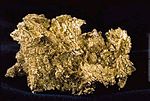
Gold nuggets do not naturally corrode, even on a geological time scale.

The materials most resistant to corrosion are those for which corrosion is thermodynamically unfavorable. Any corrosion products of gold or platinum tend to decompose spontaneously into pure metal, which is why these elements can be found in metallic form on Earth, and is a large part of their intrinsic value. More common "base" metals can only be protected by more temporary means.

Some metals have naturally slow reaction kinetics, even though their corrosion is thermodynamically favorable. These include such metals as zinc, magnesium, and cadmium. While corrosion of these metals is continuous and ongoing, it happens at an acceptably slow rate. An extreme example is graphite, which releases large amounts of energy upon oxidation, but has such slow kinetics that it is effectively immune to electrochemical corrosion under normal conditions.

 Passivation

Main article: Passivation

Given the right conditions, a thin film of corrosion products can form on a metal's surface spontaneously, acting as a barrier to further oxidation. When this layer stops growing at less than a micrometre thick under the conditions that a material will be used in, the phenomenon is known as passivation (rust, for example, usually grows to be much thicker, and so is not considered passivation, because this mixed oxidized layer is not protective). While this effect is in some sense a property of the material, it serves as an indirect kinetic barrier: the reaction is often quite rapid unless and until an impermeable layer forms. Passivation in air and water at moderate pH is seen in such materials as aluminium, stainless steel, titanium, and silicon.

These conditions required for passivation are specific to the material. The effect of pH is recorded using Pourbaix diagrams, but many other factors are influential. Some conditions that inhibit passivation include: high pH for aluminum, low pH or the presence of chloride ions for stainless steel, high temperature for titanium (in which case the oxide dissolves into the metal, rather than the electrolyte) and fluoride ions for silicon. On the other hand, sometimes unusual conditions can bring on passivation in materials that are normally unprotected, as the alkaline environment of concrete does for steel rebar. Exposure to a liquid metal such as mercury or hot solder can often circumvent passivation mechanisms.

Corrosion in passivated materials

Passivation is extremely useful in alleviating corrosion damage, but care must be taken not to trust it too thoroughly. Even a high-quality alloy will corrode if its ability to form a passivating film is hindered. Because the resulting modes of corrosion are more exotic and their immediate results are less visible than rust and other bulk corrosion, they often escape notice and cause problems among those who are not familiar with them.

 Pitting corrosion

Main article: Pitting corrosion

Certain conditions, such as low concentrations of oxygen or high concentrations of species such as chloride which compete as anions, can interfere with a given alloy's ability to re-form a passivating film. In the worst case, almost all of the surface will remain protected, but tiny local fluctuations will degrade the oxide film in a few critical points. Corrosion at these points will be greatly amplified, and can cause corrosion pits of several types, depending upon conditions. While the corrosion pits only nucleate under fairly extreme circumstances, they can continue to grow even when conditions return to normal, since the interior of a pit is naturally deprived of oxygen and locally the pH decreases to very low values and the corrosion rate increases due to an auto-catalitic process. In extreme cases, the sharp tips of extremely long and narrow can cause stress concentration to the point that otherwise tough alloys can shatter, or a thin film pierced by an invisibly small hole can hide a thumb sized pit from view. These problems are especially dangerous because they are difficult to detect before a part or structure fails. Pitting remains among the most common and damaging forms of corrosion in passivated alloys, but it can be prevented by control of the alloy's environment, which often includes ensuring that the material is exposed to oxygen uniformly (i.e., eliminating crevices)

 Weld decay and knifeline attack

Stainless steel can pose special corrosion challenges, since its passivating behavior relies on the presence of a minor alloying component (Chromium, typically only 18%). Due to the elevated temperatures of welding or during improper heat treatment, chromium carbides can form in the grain boundaries of stainless alloys. This chemical reaction robs the material of chromium in the zone near the grain boundary, making those areas much less resistant to corrosion. This creates a galvanic couple with the well-protected alloy nearby, which leads to weld decay (corrosion of the grain boundaries near welds) in highly corrosive environments. Special alloys, either with low carbon content or with added carbon "getters" such as titanium and niobium (in types 321 and 347, respectively), can prevent this effect, but the latter require special heat treatment after welding to prevent the similar phenomenon of knifeline attack. As its name applies, this is limited to a small zone, often only a few micrometres across, which causes it to proceed more rapidly. This zone is very near the weld, making it even less noticeable1.

 Crevice corrosion

Main article: Crevice corrosion

Crevice corrosion is a localized form of corrosion occurring in spaces to which the access of the working fluid from the environment is limited and a concentration cell, areas with different oxygen concentration, will take place with consequent high corrosion rate . These spaces are generally called crevices. Examples of crevices are gaps and contact areas between parts, under gaskets or seals, inside cracks and seams, spaces filled with deposits and under sludge piles.

 Microbial corrosion

Titanic's bow exhibiting microbial corrosion damage in the form of 'rusticles'
Main article: Microbial corrosion

Microbial corrosion, or bacterial corrosion, is a corrosion caused or promoted by microorganisms, usually chemoautotrophs. It can apply to both metals and non-metallic materials, in both the presence and lack of oxygen. Sulfate-reducing bacteria are common in lack of oxygen; they produce hydrogen sulfide, causing sulfide stress cracking. In presence of oxygen, some bacteria directly oxidize iron to iron oxides and hydroxides, other bacteria oxidize sulfur and produce sulfuric acid causing biogenic sulfide corrosion. Concentration cells can form in the deposits of corrosion products, causing and enhancing galvanic corrosion.

 High temperature corrosion

High temperature corrosion is chemical deterioration of a material (typically a metal) under very high temperature conditions. This non-galvanic form of corrosion can occur when a metal is subject to a high temperature atmosphere containing oxygen, sulfur or other compounds capable of oxidising (or assisting the oxidation of) the material concerned. For example, materials used in aerospace, power generation and even in car engines have to resist sustained periods at high temperature in which they may be exposed to an atmosphere containing potentially highly corrosive products of combustion.

The products of high temperature corrosion can potentially be turned to the advantage of the engineer. The formation of oxides on stainless steels, for example, can provide a protective layer preventing further atmospheric attack, allowing for a material to be used for sustained periods at both room and high temperature in hostile conditions. Such high temperature corrosion products in the form of compacted oxide layer glazes have also been shown to prevent or reduce wear during high temperature sliding contact of metallic (or metallic and ceramic) surfaces.

 Surface treatments

Galvanized surface

Applied coatings

Main article: Galvanization

Plating, painting, and the application of enamel are the most common anti-corrosion treatments. They work by providing a barrier of corrosion-resistant material between the damaging environment and the (often cheaper, tougher, and/or easier-to-process) structural material. Aside from cosmetic and manufacturing issues, there are tradeoffs in mechanical flexibility versus resistance to abrasion and high temperature. Platings usually fail only in small sections, and if the plating is more noble than the substrate (for example, chromium on steel), a galvanic couple will cause any exposed area to corrode much more rapidly than an unplated surface would. For this reason, it is often wise to plate with a more active metal such as zinc or cadmium.

Reactive coatings

If the environment is controlled (especially in recirculating systems), corrosion inhibitors can often be added to it. These form an electrically insulating and/or chemically impermeable coating on exposed metal surfaces, to suppress electrochemical reactions. Such methods obviously make the system less sensitive to scratches or defects in the coating, since extra inhibitors can be made available wherever metal becomes exposed. Chemicals that inhibit corrosion include some of the salts in hard water (Roman water systems are famous for their mineral deposits), chromates, phosphates, and a wide range of specially-designed chemicals that resemble surfactants (i.e. long-chain organic molecules with ionic end groups).

This figure-8 descender is annodized with a yellow finish. Climbing equipment is available in a wide range of anodized colors.

 Anodization

Main article: Anodising

Aluminium alloys often undergo a surface treatment. Electrochemical conditions in the bath are carefully adjusted so that uniform pores several nanometers wide appear in the metal's oxide film. These pores allow the oxide to grow much thicker than passivating conditions would allow. At the end of the treatment, the pores are allowed to seal, forming a harder-than-usual surface layer. If this coating is scratched, normal passivation processes take over to protect the damaged area.

Controlled Permeability Formwork

Controlled Permeability Formwork (CPF) is a method of preventing the corrosion of reinforcement by naturally enhancing the durability of the cover during concrete placement, . CPF has been used in environments to combat the effects of Carbonation, chlorides, frost and abrasion.

Cathodic protection

Main article: Cathodic protection

Cathodic protection (CP) is a technique to control the corrosion of a metal surface by making that surface the cathode of an electrochemical cell.

It is a method used to protect metal structures from corrosion. Cathodic protection systems are most commonly used to protect steel, water, and fuel pipelines and tanks; steel pier piles, ships, and offshore oil platforms.

For effective CP, the potential of the steel surface is polarized (pushed) more negative until the metal surface has a uniform potential. With a uniform potential, the driving force for the corrosion reaction is halted. For galvanic CP systems, the anode material corrodes under the influence of the steel, and eventually it must be replaced. The polarization is caused by the current flow from the anode to the cathode, driven by the difference in electrochemical potential between the anode and the cathode.

For larger structures, galvanic anodes cannot economically deliver enough current to provide complete protection. Impressed Current Cathodic Protection (ICCP) systems use anodes connected to a DC power source (a cathodic protection rectifier). Anodes for ICCP systems are tubular and solid rod shapes of various specialized materials. These include high silicon cast iron, graphite, mixed metal oxide or platinum coated titanium or niobium coated rod and wires.

 Economic impact

The US Federal Highway Administration released a study, entitled Corrosion Costs and Preventive Strategies in the United States, in 2002 on the direct costs associated with metallic corrosion in nearly every U.S. industry sector. The study showed that for 1998 the total annual estimated direct cost of corrosion in the U.S. was approximately $276 billion (approximately 3.1% of the US gross domestic product). FHWA Report Number:FHWA-RD-01-156. The NACE International website has a summary slideshow of the report findings. Jones1 writes that electrochemical corrosion causes between $8 billion and $128 billion in economic damage per year in the United States alone, degrading structures, machines, and containers.

The collapsed Silver Bridge, as seen from the Ohio side

Rust is one of the most common causes of bridge accidents for example. As rust has a much higher volume than the originating mass of iron, its build-up can also cause failure by forcing apart adjacent parts. It was the cause of the collapse of the Mianus river bridge in 1983, when the bearings rusted internally and pushed one corner of the road slab off its support. Three drivers on the roadway at the time died as the slab fell into the river below. The following NTSB investigation showed that a drain in the road had been blocked for road re-surfacing, and had not been unblocked so that runoff water penetrated the support hangers. It was also difficult for maintenance engineers to see the bearings from the inspection walkway. Rust was also an important factor in the Silver Bridge disaster of 1967 in West Virginia, when a steel suspension bridge collapsed in less than a minute, killing 46 drivers and passengers on the bridge at the time.

Similarly corrosion of concrete-covered steel and iron can cause the concrete to spall, creating severe structural problems. It is one of the most common failure modes of reinforced concrete bridges.

 Corrosion in nonmetals

Most ceramic materials are almost entirely immune to corrosion. The strong ionic and/or covalent bonds that hold them together leave very little free chemical energy in the structure; they can be thought of as already corroded. When corrosion does occur, it is almost always a simple dissolution of the material or chemical reaction, rather than an electrochemical process. A common example of corrosion protection in ceramics is the lime added to soda-lime glass to reduce its solubility in water; though it is not nearly as soluble as pure sodium silicate, normal glass does form sub-microscopic flaws when exposed to moisture. Due to its brittleness, such flaws cause a dramatic reduction in the strength of a glass object during its first few hours at room temperature.

Polymer degradation is due to a wide array of complex and often poorly-understood physiochemical processes. These are strikingly different from the other processes discussed here, and so the term "corrosion" is only applied to them in a loose sense of the word. Because of their large molecular weight, very little entropy can be gained by mixing a given mass of polymer with another substance, making them generally quite difficult to dissolve. While dissolution is a problem in some polymer applications, it is relatively simple to design against. A more common and related problem is swelling, where small molecules infiltrate the structure, reducing strength and stiffness and causing a volume change. Conversely, many polymers (notably flexible vinyl) are intentionally swelled with plasticizers, which can be leached out of the structure, causing brittleness or other undesirable changes. The most common form of degradation, however, is a decrease in polymer chain length. Mechanisms which break polymer chains are familiar to biologists because of their effect on DNA: ionizing radiation (most commonly ultraviolet light), free radicals, and oxidizers such as oxygen, ozone, and chlorine. Additives can slow these process very effectively, and can be as simple as a UV-absorbing pigment (i.e., titanium dioxide or carbon black). Plastic shopping bags often do not include these additives so that they break down more easily as litter.

 Corrosion of glasses

The corrosion of silicate glasses in aqueous solutions is governed by two mechanisms: diffusion-controlled leaching (ion exchange) and glass network hydrolytic dissolution[1]. Both corrosion mechanisms strongly depend on the pH of contacting solution: the rate of ion exchange decreases with pH as 10-0.5pH whereas the rate of hydrolytic dissolution increases with pH as 100.5pH [2]

Numerically, corrosion rates of glasses are characterised by normalised corrosion rates of elements NRi (g/cm2 d) which are determined as the ratio of total amount of released species into the water Mi (g) to the water-contacting surface area S (cm2), time of contact t (days) and weight fraction content of the element in the glass fi:

NRi=Mi/S·fi·t

The overall corrosion rate is a sum of contributions from both mechanisms (leaching + dissolution) NRi=Nrxi+NRh. Diffusion-controlled leaching (ion exchange) is characteristic of the initial phase of corrosion and involves replacement of alkali ions in the glass by a hydronium (H3O+) ion from the solution. It causes an ion-selective depletion of near surface layers of glasses and gives an inverse square root dependence of corrosion rate with exposure time. The diffusion controlled normalised leaching rate of cations from glasses (g/cm2 d) is given by:

NRxi=2·ρ·(Di/π·t)1/2

where t is time, Di is the i-th cation effective diffusion coefficient (cm2/d), which depends on pH of contacting water as Di = Di0·10-pH, and ρ is the density of the glass (g/cm3).

Glass network dissolution is characteristic of the later phases of corrosion and causes a congruent release of ions into the water solution at a time-independent rate in dilute solutions (g/cm2 d):

NRh=ρrh,

where rh is the stationary hydrolysis (dissolution) rate of the glass (cm/d). In closed systems the consumption of protons from the aqueous phase increases the pH and causes a fast transition to hydrolysis[3]. However further silica saturation of solution impedes hydrolysis and causes the glass to return to an ion-exchange, e.g. diffusion-controlled regime of corrosion.

In typical natural conditions normalised corrosion rates of silicate glasses are very low and are of the order of 10-7 - 10-5 g/cm2 d. The very high durability of silicate glasses in water makes them suitable for hazardous and nuclear waste immobilisation.

Glass corrosion tests

Influences of selected glass component additions on the chemical durability against water corrosion of a specific base glass (corrosion test ISO 719).[4]

There exist numerous standardized procedures for measuring the corrosion (also called chemical durability) of glasses in neutral, basic, and acidic environments, under simulated environmental conditions, in simulated body fluid, at high temperature and pressure[5], and under other conditions.

In the standard procedure ISO 719[6] a test of the extraction of water soluble basic compounds under neutral conditions is described: 2 g glass, particle size 300-500 μm, is kept for 60 min in 50 ml de-ionized water of grade 2 at 98°C. 25 ml of the obtained solution is titrated against 0.01 mol/l HCl solution. The volume of HCl needed for neutralization is recorded and classified following the values in the table below.

0.01M HCl needed to neutralize
extracted basic oxides, ml
Extracted Na2O
equivalent, μg
Hydrolytic
class
to 0.1 to 31 1
above 0.1 to 0.2 above 31 to 62 2
above 0.2 to 0.85 above 62 to 264 3
above 0.85 to 2.0 above 264 to 620 4
above 2.0 to 3.5 above 620 to 1085 5
above 3.5 above 1085 >5

References

  1. ^ A.K. Varshneya. Fundamentals of inorganic glasses. Society of Glass Technology, Sheffield, 682pp. (2006).
  2. ^ M.I. Ojovan, W.E. Lee. New Developments in Glassy Nuclear Wasteforms. Nova Science Publishers, New York, 136pp. (2007).
  3. ^ Corrosion of Glass, Ceramics and Ceramic Superconductors. Edited by: D.E. Clark, B.K. Zoitos, William Andrew Publishing/Noyes, 672pp. (1992).
  4. ^ Calculation of the Chemical Durability (Hydrolytic Class) of Glasses
  5. ^ Vapor Hydration Testing (VHT)
  6. ^ International Organization for Standardization, Procedure 719 (1985)

 See also

فیبر نوری

فیبر نوری چیست و چگونه کار می‌کند؟

قسمت اول

هرجا که صحبت از سیستم های جدید مخابراتی، سیستم های تلویزیون کابلی و اینترنت باشد، در مورد فیبر نوری هم چیزهایی می‌شنوید.

فیبرنوری چیست؟

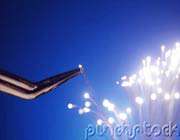
فیبرهای نوری رشته های بلند و نازکی از شیشه بسیار خالصند که ضخامتی در حدود قطر موی انسان دارند. آنها در بسته هایی بنام کابل‌های نوری کنار هم قرار داده می‌شوند و برای انتقال سیگنال‌های نوری در فواصل دور مورد استفاده قرار می‌گیرند. از آنها همچنین برای عکسبرداری پزشکی و معاینه های فنی در مهندسی مکانیک استفاده می‌شود. 

برداشتن یک رشته فیبر نوری

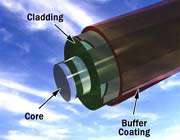
اگر با دقت به یک رشته فیبر نوری نگاه کنید، می بینید که از قسمت‌های زیر ساخته شده :

• هسته _ هسته بخش مرکزی فیبر است که از شیشه ساخته شده و نور در این قسمت سیر می‌کند.     

• لایه روکش _ واسطه شفافی که هسته مرکزی فیبر نوری را احاطه می‌کند وباعث انعکاس نور به داخل هسته می‌شود.

• روکش محافظ _ روکشی پلاستیکی که فیبر نوری در برابر رطوبت و آسیب دیدن محافظت می‌کند.

صدها یا هزاران عدد از این رشته های فیبر نوری بصورت بسته ای در کنار هم قرار داده می‌شوند که به آن کابل نوری گویند. این دسته از رشته های فیبر نوری با یک پوشش خارجی موسوم به ژاکت یا غلاف محافظت می‌شوند.


فیبرهای نوری دو نوعند :

1. فیبرهای نوری تک وجهی: این نوع از فیبرها، هسته های کوچکی دارند ( قطری در حدود inch (4-) 10x 5/3  یا   9 میکرون ) و می‌توانند نور لیزر مادون قرمز ( با طول موج 1300 تا 1550 نانومتر ) را درون خود هدایت کنند.

2. فیبرهای نوری چند وجهی: این نوع از فیبرها هسته های بزرگتری دارند ( قطری در حدود inch (3-) 10x 5/2 یا  5/62  میکرون ) و نور مادون قرمز گسیل شده از دیودهای نوری موسوم به LED ها را ( با طول موج 850 تا 1300 نانومتر ) درون خود هدایت می‌کنند.

برخی از فیبرهای نوری از پلاستیک ساخته می‌شوند. این فیبرها هسته بزرگی ( با قطر 4 صدم inch یا یک میلیمتر ) دارند و نور مرئی قرمزی را که از LED ها گسیل می‌شود ( و طول موجی برابر با 650 نانومتر دارد ) هدایت می‌کنند.

بیایید ببینیم طرز کار فیبر نوری چیست.

ساختار داخلی یک رشته فیبر نوری

یک فیبر نوری چگونه نور را هدایت می‌کند؟

فرض کنید می‌خواهید یک باریکه نور را بطور مستقیم و در امتداد یک کریدور بتابانید. نور براحتی در خطوط راست سیر می‌کند و مشکلی ازین جهت نیست. حال اگر کریدور مستقیم نباشد و در طول خود خمیدگی داشته باشد چگونه نور را به انتهای آن می‌رسانید؟

برای این منظور می‌توانید از یک آینه استفاده کنید که در محل خمیدگی راهرو قرار می‌گیرد و نور را در جهت مناسب منحرف می‌کند. اگر راهرو خیلی پیچ در پیچ باشد و خمهای زیادی داشته باشد چه؟ می‌توانید دیوارها را با آینه بپوشانید و نور را به دام بیندازید بطوریکه در طول راهرو از یک گوشه به گوشه دیگر بپرد. این دقیقا همان چیزی است که در یک فیبرنوری اتفاق می افتد.

نور در یک کابل فیبرنوری، بر اساس قاعده ای موسوم به بازتابش داخلی، مرتبا بوسیله دیواره آینه پوش لایه ای که هسته را فراگرفته، به این سو و آن سو پرش می‌کند و در طول هسته پیش می‌رود.

از آنجا که لایه آینه پوش اطراف هسته هیچ نوری را جذب نمی‌کند، موج نور می‌تواند فواصل طولانی را طی کند. به هر حال، برخی از سیگنال‌های نوری در حین حرکت در طول فیبر، ضعیف می‌شوند که علت عمده آن وجود برخی ناخالصی‌ها داخل شیشه است. میزان ضعیف شدن سیگنال به درجه خلوص شیشه بکار رفته در داخل فیبر و نیز طول موج نوری که درون فیبر سیر می‌کند بستگی دارد.


سیستم ارتباط بوسیله فیبرنوری

برای پی بردن به اینکه فیبرهای نوری چگونه در سیستم های ارتباطی مورد استفاده قرار می‌گیرند، اجازه دهید نگاهی بیاندازیم به فیلم یا سندی که مربوط به جنگ جهانی دوم است. دو کشتی نیروی دریایی را درنظر بگیرید که از کنار یکدیگر عبور می‌کنند و لازم است باهم ارتباط برقرار کنند درحالی که امکان استفاده از رادیو وجود ندارد و یا دریا طوفانی است. کاپیتان یکی از کشتی ها پیامی را برای یک ملوان که روی عرشه است می‌فرستد. ملوان آن پیام را به کد مورس ترجمه می‌کند و از نورافکنی ویژه که یک پنجره کرکره جلو آن است برای ارسال پیام به کشتی مقابل استفاده می‌‌نماید. ملوانی که در کشتی مقابل است این پیام مورس را می‌گیرد، ترجمه می‌کند و به کاپیتان می‌دهد. (ملوان کشتی دوم عکس عملی را انجام می‌دهد که ملوان کشتی اول انجام داد.)

حالا فرض کنید این دو کشتی هر یک در گوشه ای از اقیانوسند و هزاران مایل فاصله دارند و در فاصله بین آنها یک سیستم ارتباطی فیبرنوری وجود دارد.

سیستم‌های ارتباط بوسیله فیبرنوری، شامل این قسمت هاست:

فرستنده: سیگنال‌های نور را تولید می‌کند و به رمز در می‌آورد.

فیبرنوری: سیگنال‌های نور را تا فواصل دور هدایت می‌کند.

تقویت کننده نوری: ممکن است برای تقویت سیگنال‌های نوری لازم باشد. (برای ارسال سیگنال به فواصل خیلی دور)

گیرنده نوری: سیگنال‌های نور را دریافت و رمزگشائی می‌نماید.

یک رشته فیبر نوری

فرستنده

نقش فرستنده شبیه ملوانی است که روی عرشه کشتی فرستنده پیام ایستاده و پیام را ارسال می‌کند. فرستنده ابزار تولید نور را در فواصل زمانی مناسب خاموش یا روشن می‌کند.

فرستنده درعمل به فیبر نوری متصل می‌شود و حتی ممکن است دارای لنزی برای متمرکز کردن نور به داخل فیبر هم باشد. قدرت اشعه لیزر بیش از LED‌ هاست اما با کم و زیاد شدن دما شدت نورشان تغییر می‌کند و گرانتر هم هستند. متداول‌ترین طول موج‌هایی که استفاده می‌شود عبارتند از: 850 نانومتر، 1300 نانومتر و 1550 نانومتر. (مادون قرمز و طول موج‌های نامرئی طیف).


تقویت کننده نوری

همانطور که قبلا هم به آن اشاره شد، نور حین عبور از فیبر ضعیف می‌شود. (مخصوصا در فواصل طولانی بیش از نیم مایل یا حدود یک کیلومتر مثلا در کابل‌های زیر دریا) بنابرین یک یا بیش از یک تقویت کننده نوری در طول کابل بسته می‌شوند تا نور ضعیف شده را تقویت کنند.

یک تقویت کننده نوری دارای فیبرهای نوری با پوشش ویژه ای است. نور ضعیف شده پس از ورود به این تقویت کننده تحت تاثیر این پوشش خاص و نیز نور لیزری که به این پوشش تابیده می‌شود تقویت می‌شود. ملکول‌های موجود در این پوشش ویژه با تابش لیزر به آنها، سیگنال نوری جدید و قوی تولید می‌کنند که مشخصات آن مشابه نور ورودی به تقویت کننده است. درواقع تقویت کننده نوری یک آمپلی فایر لیزری برای نور ورودی به آن است.


گیرنده نوری

گیرنده نوری مشابه ملوانی که روی عرشه کشتی گیرنده پیام بود عمل می‌کند. این گیرنده سیگنال‌های نوری ورودی را می‌گیرد، رمزگشائی می‌کند و سیگنال‌های الکتریکی مناسب را برای ارسال به کامپیوتر، تلویزیون یا تلفن کاربر تولید و به آنها ارسال می نماید. این گیرنده برای دریافت و آشکارسازی نور ورودی از فتوسل یا فتودیود استفاده می‌کند.

 منبع

تاريخچه پیل سوختی

اگر چه پيل‌سوختي به تازگي به عنوان يكي از راهكارهاي توليد انرژي الكتريكي مطرح شده است ولي تاريخچه آن به قرن نوزدهم و كار دانشمند انگلیسی سرویلیام گرو بر مي‌گردد. او اولين پيل‌سوختي را در سال 1839 با سرمشق گرفتن از واکنش الکترولیز آب، طی واکنش معکوس و در حضور کاتالیست پلاتین ساخت.

واژه "پيل‌سوختي" در سال 1889 توسط لودويک مند و چارلز لنجر به كار گرفته شد. آنها نوعي پيل‌سوختي که هوا و سوخت ذغال‌سنگ را مصرف مي‌کرد، ساختند. تلاش‌هاي متعددي در اوايل قرن بيستم در جهت توسعه پيل‌سوختي انجام شد که به دليل عدم درک علمي مسئله هيچ يک موفقيت آميز نبود. علاقه به استفاده از پیل سوختی با کشف سوخت‌های فسیلی ارزان و رواج موتورهای بخار کمرنگ گردید.

فصلي ديگر از تاريخچه تحقيقات پيل‌سوختي توسط فرانسيس بيكن از دانشگاه كمبريج انجام شد. او در سال 1932 بر روي ماشين ساخته شده توسط مند و لنجر اصلاحات بسياري انجام داد. اين اصلاحات شامل جايگزيني كاتاليست گرانقيمت پلاتين با نيكل و همچنين استفاده از هيدروكسيدپتاسيم قليايي به جاي اسيد سولفوريك به دليل مزيت عدم خورندگي آن مي‌باشد. اين اختراع كه اولين پيل‌سوختي قليايي بود، “Bacon Cell” ناميده شد. او 27 سال تحقيقات خود را ادامه داد تا توانست يك پيل‌سوختي كامل وكارا ارائه نمايد. بيكون در سال 1959 پيل‌سوختي با توان 5 كيلووات را توليد نمود كه مي‌توانست نيروي محركه يك دستگاه جوشكاري را تامين نمايد.

تحقيقات جديد در اين عرصه از اوايل دهه 60 میلادی با اوج گيري فعالیت‌های مربوط به تسخیر فضا توسط انسان آغاز شد. مركز تحقيقات ناسا در پي تامين نيرو جهت پروازهاي فضايي با سرنشين بود. ناسا پس از رد گزينه‌هاي موجود نظير باتري (به علت سنگيني)، انرژي خورشيدي(به علت گران بودن) و انرژي هسته‌اي (به علت ريسك بالا) پيل‌سوختي را انتخاب نمود.

تحقيقات در اين زمينه به ساخت پيل‌سوختي پليمري توسط شركت جنرال الكتريك منجر شد. ایالات متحده فن‌آوری پیل سوختی را در برنامه فضايي Gemini استفاده نمود كه اولين كاربرد تجاري پيل‌سوختي بود.

پرت و ويتني دو سازنده موتور هواپیما پيل‌سوختي قليايي بيكن را به منظور كاهش وزن و افزايش طول عمر اصلاح نموده و آن را در برنامه فضايي آپولو به كار بردند. در هر دو پروژه پيل‌سوختي بعنوان منبع انرژي الكتريكي براي فضاپيما استفاده شدند. اما در پروژه آپولو پيل‌هاي سوختي براي فضانوردان آب آشاميدني نيز توليد مي‌كرد. پس از کاربرد پيل‌هاي سوختي در اين پروژه‌ها، دولت‌ها و شركت‌ها به اين فن‌آوري جديد به عنوان منبع مناسبي براي تولید انرژي پاك در آينده توجه روزافزوني نشان دادند.

از سال 1970 فنآوري پيل‌سوختي براي سيستم‌هاي زميني توسعه يافت. تحريم نفتي از سال1973-1979 موجب تشديد تلاش دولتمردان امريكا و محققين در توسعه اين فن‌آوري به جهت قطع وابستگي به واردات نفتي گشت.

در طول دهه 80 تلاش محققين بر تهيه مواد مورد نياز، انتخاب سوخت مناسب و كاهش هزينه استوار بود. همچنين اولين محصول تجاري جهت تامين نيرو محركه خودرو در سال1993 توسط شركت بلارد ارائه شد.

كاربردهاي پيل سوختي نيروگاهي

بازار مولدهای نیروگاهی پیل‌سوختی بسیار گسترده است و کاربردهای دولتی، نظامی و صنعتی را شامل می‌شود. همچنین به عنوان نیروی پشتیبان در مواقع اضطراری در مخابرات، صنایع پزشکی، ادارات، بیمارستان‌ها، هتل‌های بزرگ و سیستم‌های کامپیوتری به کار می‌رود.

پیل‌های سوختی نسبتاً آرام و بی‌صدا هستند لذا جهت تولید برق محلی مناسبند. علاوه بر کاهش نیاز به گسترش شبکه توزیع برق، از گرمای تولیدی از این نیروگاه‌ها می‌توان جهت گرمایش و تولید بخار آب استفاده نمود.

این نیروگاه‌ها در مصارف کوچک بازدهی الکتریکی بالایی دارند و همچنین در ترکیب با نیروگاه‌های گاز طبیعی بازدهی الکتریکی آنها به 70-80% می‌رسد.

مزیت دیگر این نیروگاه‌ها عدم آلودگی محیط زیست است. خروجی نیروگاه‌های پیل‌سوختی بخار‌آب می باشد.

نیروگاه‌های پیل سوختی قابلیت استفاده از سوخت‌های مختلف مانند متانول، اتانول، هیدروژن، گاز طبیعی، پروپان و بنزین را دارند و مانند سایر نیروگاه‌ها محدود به استفاده از یک منبع انرژی خاص نیست. از زمانیکه اولین پیل‌سوختی نیروگاهی در دهه 60 تولید گشت، تا کنون در مجموع 650 سیستم کامل با توان بیش از 10 کیلووات (میانگین آن 200 کیلووات است) ساخته شد. تقریباً 90 درصد از این واحدها با گاز طبیعی تغذیه می شود. البته استفاده از سوخت‌های جایگزین نظیر بیوگاز و گاز ذغال نیز پیشرفت قابل ملاحظه‌ای داشته است. در این بخش نیروگاه انواع متنوع پیل‌سوختی به کار رفته است. در ابتدا از پیل‌سوختی اسید فسفریک آغاز گردید و سپس پیل‌سوختی پلیمری و پیل‌سوختی کربنات مذاب جایگزین آن گشتند. در حالیکه پیل‌سوختی اکسید جامد در آینده بازار را به قبضه در خواهد آورد.

در بخش پیل‌های سوختی نیروگاهی کوچک (زیر 10 کیلووات) نیز رشد قابل ملاحظه‌ای را شاهد بودیم. تعداد این واحدها اکنون به 1900 رسیده است. این سیستم جهت مصارف خانگی و بازارهایی از قبیل UPS ونیروی پشتیبان در اماکن دوردست کاربری دارد. نیمی از محصولات در آمریکای شمالی توسعه یافته است.

در بخش سیستم‌های نیروگاهی کوچک 20 درصد سهم بازار را پیل‌سوختی اکسیدجامد و مابقی را پیل‌سوختی پلیمری تشکیل مي‌‌دهد. بازار پیل‌سوختی کوچک در ژاپن که به مصارف خانگی اختصاص دارد، منحصراً با پیل‌سوختی پلیمری است و امید است تا انتهای سال 2005 محصولات به بازار عرضه گردند.

فروش تعدادی از واحدهای نیروگاهی کوچک آغاز شده است که از جمله آنها سیستم GenCore شرکت Plug Power می باشد(توان 5 کیلووات، 15000 دلار)

دولت ژاپن حمایت خود از توسعه پیل‌های سوختی نیروگاهی در ابعاد بزرگ را از سال 1980 آغاز نموده است و شرکت های ژاپنی گاز توکیو و Osaca از بزرگترین شرکت های توسعه دهنده این فن‌آوری می‌باشند.

انواع پيلهاي سوختي

پيلهاي سوختي در انواع زير موجود مي‎باشند:
پيلهاي سوختي اسيدفسفريكي
پيلهاي سوختي پليمري
پيلهاي سوختي اكسيد جامد
پيلهاي سوختي قليايي
پيلهاي سوختي متانولي

مزاياي پيل سوختي چيست؟

راندمان بالا، حداقل نشر آلاينده‎هاي زيست محيطي،امكان استفاده از سوختهاي فسيلي و پاك، مدولار بودن و قابليت توليد همزمان حرارت و الكتريسيته و استفاده در كاربردهاي توليد غيرمتمركز انرژي از جمله مزاياي پيل سوختي مي‎باشند.

روشهاي توليد پيل سوختي

جدیدترین راه تولید پیل سوختی

لوى تامپسون، پرفسور مهندسى شيمى و رئيس تيم تحقيقاتى پيل سوختى جديد در اين مورد چنين مى گويد: «ما به سامانه اى رسيده ايم كه بسيار مشابه سامانه هايى است كه براى توليد ابزارهاى ميكرو الكترونيك مورد استفاده قرار مى گيرد.»
روشى كه پرفسور تامپسون و تيم همكار او به آن رسيده اند، استفاده از ميكروفابريكيشن است. ميكروفابريكيشن خلق ساختارهاى فيزيكي، ابزار و مواد مركبى است كه اجزاى تشكل دهنده آنها در حدود يك ميكرومتر هستند. ميكروالكترونيك ها منبع انرژى كالاهاى بسيار زيادى هستند از كارت تبريك صوتى گرفته تا كامپيوترهاى قابل حمل.
تامپسون يكى از بزرگترين موانع استفاده تجارى و گسترده از پيل هاى سوختى را هزينه بالاى ساخت آن مى داند. براى اينكه از اين منبع در مصارف روزمره استفاده كرد، بايد هزينه توليد آن پايين تر بيايد تا مثلا در يك كامپيوتر قابل حمل مورد استفاده قرار گيرد.
در شيوه معمول كنوني، پيل هاى سوختي، مشابه خودروها توليد مى شوند يعنى قطعات مختلف آنها به صورت جداگانه ساخته مى شوند و سپس روى هم سوار مى شوند تا يك پيل سوختى توليد شود. اين كار گستره بسيار زيادى دارد و علاوه بر هزينه بالاى آن، كه به آن اشاره شد نياز به زمان بسيار زيادى دارد. اما گروه تحقيقاتى تامپسون با استفاده از فرآيند پيشرفته ميكروفابريكيشن، نسل جديد پيل هاى سوختى را مى سازد. اين بار به جاى توليد جداگانه پيل سوختي، آنها به صورت لايه لايه ساخته مى شوند، روشى كه در حال حاضر براى ساخت ابزارهاى ميكروالكترونيك مورد استفاده قرار مى گيرد.
محققان دانشگاه ميشيگان اميدوارند با استفاده از اين فن آورى ارزان قيمت و همچنين استفاده از مواد ارزانتر، قيمت پيل هاى سوختى را از ۱۰ هزار دلار براى هر كيلو وات به ۱۰۰۰ دلار برسانند.
با اين قيمت، پيل هاى سوختى مى توانند با باترى هاى يون لتييوم كه در سطح وسيع مورد استفاده قرار مى گيرند رقابت كنند.
دانشگاه ميشيگان استفاده از ميكروفابريكيشن براى توليد پيل سوختى را دو سال و نيم پيش آغاز كرد. اولين بازار آنها وسايل برقى است، ولى آنها در گام بعدى مى خواهند از پيل هاى سوختى در اتومبيل ها استفاده كنند.

سوخت تازه برای پیل های سوختی

 با استفاده از اسیدفرمیك به عنوان سوخت غیرقابل اشتعال در پیل های سوختی محصولات الكترونیكی قابل حمل بدون اتصال به شبكه برق كار می كنند. شركت های BASE و Tekion توسعه دهنده پیل های سوختی مینیاتوری برای محصولات قابل حمل به منظور توسعه اسیدفرمیك به عنوان سوخت برای فناوری پیل سوختی Tekion تفاهم نامه ای امضا كردند.BASE بزرگترین تولید كننده اسیدفرمیك در دنیا محسوب می شود و قصد دارد با همكاری Tekion، فرمولاسیون مناسبی را برای اسیدفرمیك تهیه و آزمایش كند. این دو شركت همچنین در زمینه توسعه كدها و استانداردهای مرتبط با این موضوع نیز فعالیت خواهند داشت و تجربه هایشان را در زمینه سازگاری این مواد برای پیل های سوختی به اشتراك می گذارند. بر اساس این گزارش، اولین كاربرد تجاری محصولات Tekion، یك نمونه «بسته انرژی» است كه درون دستگاه های الكترونیكی قابل حمل جای گرفته یا به آنها متصل می شود تا این دستگاه ها بتوانند بدون اتصال به شبكه برق كار كنند. این بسته یك سیستم هیبریدی باتری پیل سوختی مینیاتوری است كه با نام تجاری بسته انرژی Formira در بازار موجود است و سوخت گیری آن با تعویض كارتریج اسیدفرمیك صورت می گیرد. این فناوری برای استفاده در محصولات الكترونیكی قابل حمل در محدوده توانی كمتر از ۵۰ وات با انرژی كمتر از ۱۰۰ وات ساعت طراحی شده و از مزایای قابل توجهی برخوردار است.

ساخت پيل سوختي با نيروي باكتري

تيمي متشكيل از ميكروبيولوژيست‌ها، مهندسين و متخصصان شيمي زمين از دانشگاه‌هاي كاليفرنياي جنوبي و رايس به منظور ساخت پيل‌هاي سوختي ( به اندازه يك كف دست) با نيروي محركه باكتري براي تامين انرژي هواپيماهاي جاسوسي همكاري مشترك خود را آغاز كردند. نيروي هوايي آمريكا از مدتها قبل در پي توليد وسايل نقليه هوايي در مقياس مينياتوري (به اندازه حشرات) بود، اما تاكنون اين خواسته به دليل نداشتن منبع انرژي فشرده مناسب ناكام مانده است.

اين گروه تحقيقاتي اميدوار است با سرمايه‌گذاري 4/4 ميليون دلاري مركز تحقيقات دانشگاهي در وزارت دفاع (MURI) بتواند با توليد نخستين نمونه بدون سرنشين، طي پنج سال آينده اين انديشه را محقق سازد. بر اساس اين گزارش، در دانشگاه رايس به منظور درك چگونگي اتصال و اثر متقابل باكتري Sewanella بر سطوح آند در پيل سوختي، تحقيقاتي در حال انجام است.

آند در پيل سوختي و باتري‌ها، وظيفه جمع‌آوري الكترون اضافي را بر عهده دارد و اين تيم قصد دارد شرايط بهينه انتقال الكترون‌ها در سطح آند در شرايط مختلف را تعيين كند.

اجزاي اصلي اين سيستم باكتري، سطح و محلول هضم كننده باكتري است كه تغيير هر يك از اين عوامل روي دو عامل ديگر مؤثر بوده و هدف، يافتن شرايط بهينه عملكرد سيستم كلي است.

 دانشگاه كاليفرنياي جنوبي در زمينه روش‌هاي ژنتيكي، حفظ متابوليسم تنفسي ميكروب‌ها در محيط‌هاي با اكسيژن كم، تحقيقاتي انجام داده است. Sewanella يكي از اين باكتري‌ها براي متابوليسم كامل غذا به جاي اكسيژن از فلز استفاده مي‌كند و از آنجا كه اين ارگانيسم قادر است مستقيما الكترون‌ها را به اكسيد فلزي جامد انتقال دهد، مي توان آن را در آند پيل سوختي مورد استفاده قرار داد.

در مطالعه پيل سوختي به منظور ارزيابي رفتار باكتري در شرايط مختلف از مدل‌هاي رايانه‌اي استفاده شده است كه انجام اين آزمايش‌ها توسط رايانه، موجب تمركز آزمايش‌هاي تجربي روي روش‌هاي مناسب‌تر و صرفه‌جويي در زمان و هزينه خواهد شد.

يکي ديگر از انگيزه هاي وسوه برانگيز بکارگيري پيل سوختي

شركت جنرال موتورز قصد دارد با برنامه اي بلند مدت، سوخت هيدروژن را به صورت همه گير در خودروها مورد استفاده قرار دهد.
 در حال حاضر شش ميليارد و 400 ميليون انسان بر روي كره زمين زندگي مي‌كنند و اين آمار تا سال 2020 به هفت ميليارد و 500 ميليون نفر خواهد رسيد. در همين حال پيش‌بيني مي‌شود، در مدت زمان فوق شمار افرادي كه صاحب خودرو مي‌شوند 12 تا 15 درصد رشد داشته باشد و اين بدان معني است كه تعداد خودروها كه در حال حاضر در حدود 775 ميليون دستگاه برآورد شده است، تا سال 2020 به بيش از يك ميليارد و 100 ميليون دستگاه خواهد رسيد. بنابراين كاهش مصرف سوخت و آلاينده‌هاي محيط زيست اهميت بسيار زيادي پيدا مي‌كند كه در اين ميان شركت خودروسازي جنرال موتورز آمريكا با معرفي تكنولوژي پيل سوختي هيدروژني توانسته است اميد به جابجايي بدون آلودگي رادر آينده افزايش دهد.

لذا  توسعه خودروهاي پيل سوختي به سرعت در جهان در حال رشد است، به طوري كه در حال حاضر شركت‌هاي خودروسازي جنرال موتورز و اوپل بيش از يك ميليارد دلار صرف تحقيقات در اين تكنولوژي كرده‌اند.

"هيدروژن 3 اوپل" ثابت كرده است كه رانندگي با خودروهاي متفاوت، مسير خود را از آزمايشگاه به جاده هموار كرده است و نمونه اوليه آن در حال حاضر با همكاري شركت سازنده مبلمان ايكيا (IKEA) در حال گذراندن آزمايشهاي متفاوت است و سكوئل (Seqel) جنرال موتورز به توليد خودروهاي با پيل سوختي نزديك‌تر شده است.

"هيدروژن 3 اوپل"؛ دونده دو ماراتن، قهرمان مسابقات رالي

"هيدروژن 3 اوپل" جانشين نمونه اوليه هيدروژني است كه در بهار سال 2000 معرفي شد و از روي طرح خودرو زافيرا اوپل ساخته شده بود.

نيروي برق اين خودرو توسط 200 قطعه پيل سوختي كه به صورت سري به يكديگر متصل شده‌اند، توليد مي‌شود. اين پيل‌ها نيروي موتور برقي 82 اسب بخار بر 60 كيلووات هيدروژن 3 را تامين مي‌كند. اين نيروگاه كه حداكثر 215NM گشتاور توسعه مي‌دهد، حداكثر سرعتي برابر با 160 كيلومتر بر ساعت توليد مي‌كند و در كمتر از 16 ثانيه از صفر تا 100 كيلومتر در ساعت شتاب مي‌گيرد كه در حالتي كاملا بي‌صداست.

در مسابقات ماراتن تابستان سال 2004، هيدروژن 3 اوپل توانست بدون هيچ مشكلي 9 هزار و 696 كيلومتر را در 14 كشور مختلف اروپايي طي كند. در آوريل سال 2005 نيز اين خودرو توانست جايزه مسابقات رالي مونت كارلو را براي وسايل نقليه داراي پيل سوختي از آن خود كند.

شركت خودروسازي اوپل اكنون در حال گسترش تكنولوژي آزمايشهاي پيل سوختي با همكاري شركت سوئدي ايكيا مي‌باشد. وسايل نقليه پيل سوختي هيدروژن 3 كه عاري از آلاينده‌هاي زيست محيطي مي‌باشد از اوايل تابستان سال گذشته تحويل كالاها به مشتريان ايكيا را در برلين آغاز كرده است. سوخت اين وسايل نقليه با هيدروژن مايع تامين مي‌شود.

آزمايشهاي اين خودروها تحت نظارت پروژه همكاري انرژي پاك دولت آلمان انجام مي‌شود كه عملكرد انرژي 17 خودرو با سوخت هيدروژني را تحت شرايط خاص آزمايش مي‌كند.

بزرگترين جايگاه سوخت گاز هيدروژني جهان در پاييز سال 2004 در پايتخت آلمان آغاز به كار كرد و قرار است علاوه بر گاز هيدروژن و هيدروژن مايع، بنزين و گازوئيل نيز به مردم ارايه كند.

سكوئل جنرال موتورز

 خودروي سكوئل جنرال موتورز محصولي است كه تمامي نتايج تحقيقات فشرده كه طي چند سال اخير از سوي بزرگترين خودروساز جهان انجام شده است را در بر دارد؛ پروژه‌اي كه جنرال موتورز بيش از يك ميليارد دلار در آن سرمايه‌گذاري كرده است. اين خودرو جادار به گونه‌اي طراحي شده است كه كمترين آلايندگي محيط زيست را دارد. در اين خودرو سه منبع با فشار بالا تعبيه شده است كه موقعيت آنها در ميانه شاسي باعث بهبود مركز ثقل خودرو مي‌شود. اين خودروها كه از اصلاحات فني بسيار زيادي نيز بهره‌مند مي‌باشند منحصر به فرد هستند.

خودروي سكوئل جنرال موتورز به دليل افزايش 25 درصدي نيرو توسط تكنولوژي جديد مي‌تواند سرعت صفر تا 100 كيلومتر را در كمتر از 10 ثانيه به دست آورد.

اجزاي پيل سوختي شامل توده پيل سوختي، دستگاه فرعي هيدروژن و فرآوري هوا، سيستم خنك كننده و سيستم توزيع ولتاژ بالا مي‌باشد.

منبع